
What to Do First
Imagine coming home and going to your basement, only to find it smells musty and has water stains on the floor. Fixing water leaks in your basement is important because it can stop bigger problems like mold and damage to your house. This guide will help you figure out how to spot and fix basement leaks before they turn into big, expensive issues.
Finding the Problem
The sooner you see the signs of a leak, the better. Here’s how to tell if your basement might be leaking:
- It smells damp or musty.
- You see water stains on the walls or floor.
- There’s a white powdery stuff on the walls (efflorescence).
- Mold or mildew is growing.
- Paint or wallpaper is peeling.
- It’s more humid than usual.
- There are cracks in the walls or foundation.
- Water is pooling on the floor.
- Insulation is wet or damp.
- Windows or pipes have a lot of condensation.
Why Basements Leak
Knowing why leaks happen can help you fix them. Leaks can come from outside or inside your house.
Outside Causes
- Poor drainage: Water can pool by your house and seep into the basement.
- Clogged gutters: Water can overflow and collect by your foundation.
- Bad window wells: These can let water in through unsealed windows.
- High water table: In some areas, water pressure can force moisture into your basement.
Inside Causes
- Broken pipes: A burst pipe can flood your basement.
- Bad seals: Gaps and cracks in walls or floor joints let water in.
- Failed sump pump: If the sump pump breaks, your basement can flood.
- Foundation cracks: These cracks let water seep in.
What to Do If You Find a Leak
If you spot a leak, act fast:
- Check how bad the leak is: See if it’s a small issue or a big problem.
- Turn off water sources: If the leak is from inside, shut off the water.
- Move valuable items: Protect anything that could get damaged.
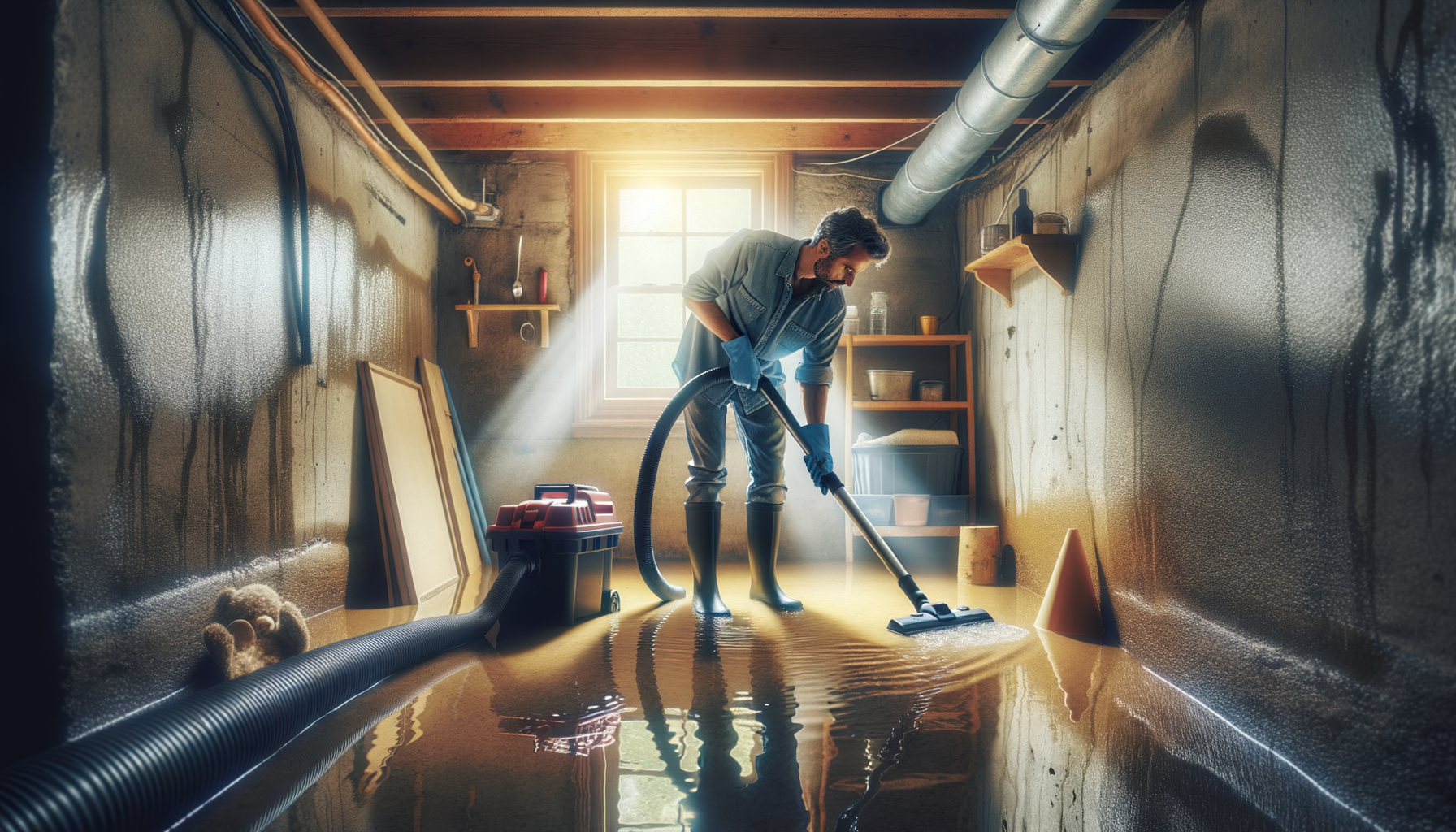
- Clean up water: Use a wet/dry vacuum to remove standing water.
- Air out the area: Open windows and use fans to dry things out and stop mold.
Fixing Minor Leaks Yourself
Sealing Cracks and Gaps
- Hydraulic cement: Use this to seal cracks where water gets in.
- Waterproof sealant: Epoxy-based sealants can close small gaps in walls.
Better Drainage
- Extend downspouts: Make sure they direct water away from the house.
- Install a French drain: This helps move water away from your basement.
- Regrade the land: Make sure the ground slopes away from your house.
Waterproofing Basement Walls
- Use wall sealers: Apply liquid sealers to block moisture.
- Install a vapor barrier: This stops moisture from getting through walls.
- Apply waterproof paint: This adds extra protection against moisture.
When to Call for Help
Sometimes, you can’t fix the problem yourself. Call a professional if you find:
- Big cracks in the foundation
- Persistent leaks even after trying to fix them
- Structural problems
- Lots of mold
What Pros Will Do
- Inspect and assess: They’ll find the source of the leak.
- Use special tools and materials: For repairs that last long.
- Offer long-term solutions and warranties: To ensure the problem is fixed for good.
How to Prevent Future Leaks
Regular maintenance can stop leaks before they start:
- Clean gutters and downspouts regularly.
- Seal new cracks as soon as you see them.
- Check the sump pump often to make sure it works.
- Keep the ground sloped away from your house.
- Install window well covers to keep water out.
- Use a dehumidifier to control moisture.
Wrap-Up
Fixing basement water leaks quickly is important to keep your home safe. By spotting leaks early, knowing what causes them, acting fast, trying DIY fixes, and calling professionals when needed, you can prevent big issues. Regular maintenance is key to stopping leaks before they start. Don’t wait—take steps now to protect your home.
Helpful Links
- How to Install a French Drain: Step-by-Step Guide
- Recommended Waterproofing Products
- Find Local Basement Waterproofing Professionals
Leave a Reply