
Introduction
Imagine coming home and finding your favorite childhood photos floating in water in your basement. Basement leaks can mess up your home and ruin your special things. In this article, we’ll explain why basements leak and what you can do to fix and stop them.
Understanding Basement Leaking
Common Causes of Basement Leaking
1. Groundwater Seepage: Water from the ground can get into basement walls if they’re not sealed properly. This happens when water soaks into the soil around your home and pushes its way inside.
2. Poor Drainage: If your yard does not drain water away from your house, it can cause leaks. Gutters and downspouts that don’t direct water away can let it pool around your home and seep into your basement.
3. Plumbing Issues: Leaks from pipes or your water heater can also flood the basement.
Signs of a Basement Leak
1. Persistent Dampness: Wet spots, condensation on walls, and a damp feeling in the basement are signs of a leak.
2. Mold and Mildew: Bad smells and visible mold can mean there’s been a leak for a while. Mold can damage your stuff and is bad for your health.
3. Cracks in Walls or Floors: Cracks in the walls or floors may let water in over time.
Short-Term Solutions for Basement Leaks
Immediate Actions
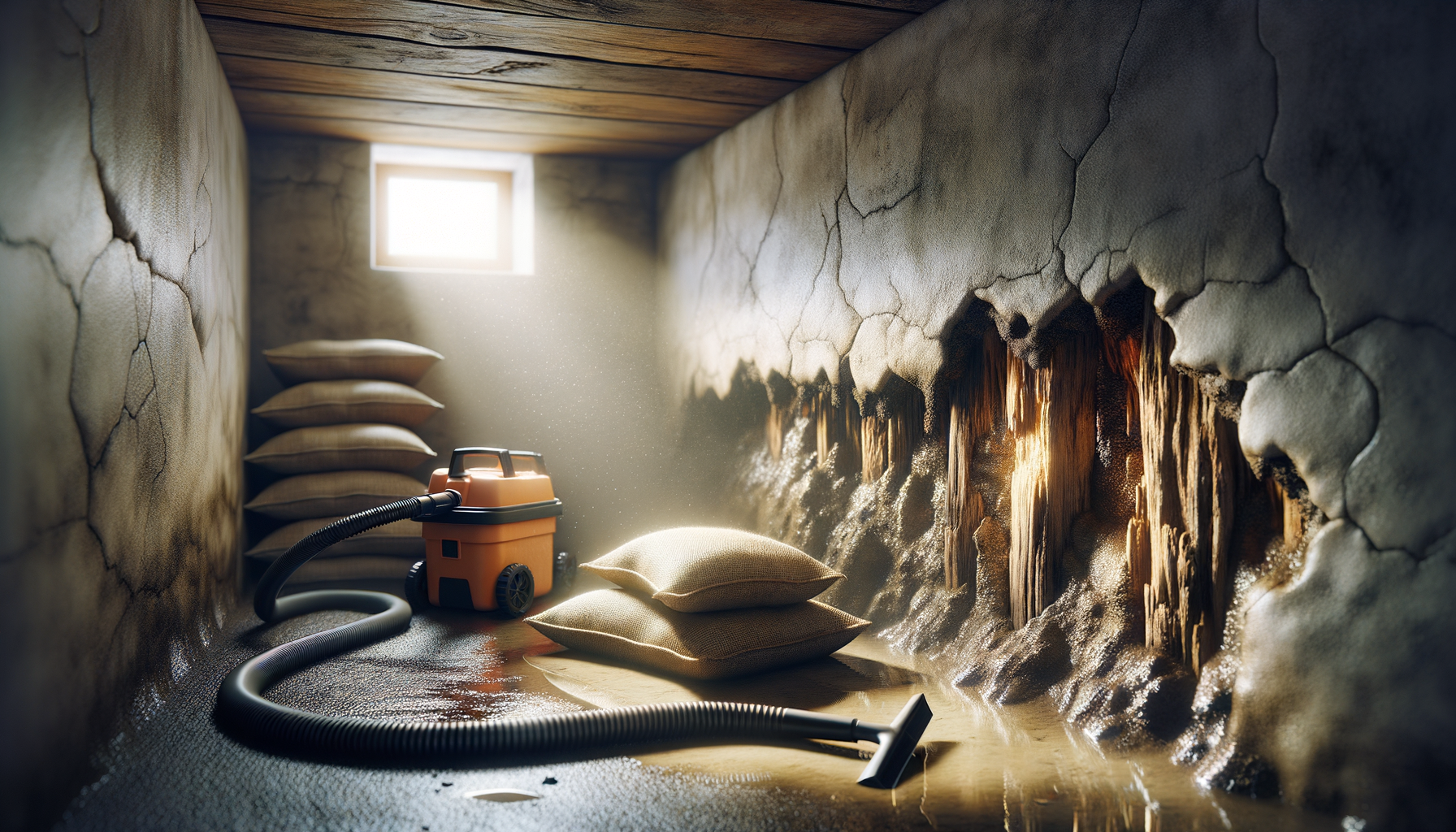
1. Use a Wet/Dry Vacuum: Quickly clean up any standing water with a wet/dry vacuum. This helps to stop more damage and reduces moisture.
2. Temporarily Plugging Leaks: Use epoxy or sealants to stop water coming in through visible cracks.
3. Installing a Dehumidifier: Removing humidity from the air can help keep things dry and stop mold growth.
Temporary Barriers
Sandbags or Water-Absorbing Pads: These can be used to block water during heavy rain or possible flooding.
Long-Term Solutions to Prevent Basement Leaking
Waterproofing Techniques
1. Exterior Waterproofing: Putting a waterproof layer on the outside of your home’s foundation keeps water out but can be expensive.
2. Interior Sealants: Using waterproof paint or sealants inside the basement adds extra protection.
Improving Drainage
1. Installing or Repairing Gutters: Make sure your gutters work well and direct water away from your home.
2. French Drains: A French drain helps guide water away by using a trench filled with gravel and a perforated pipe.
Sump Pumps
1. Function and Installation: A sump pump removes water from your basement by collecting it in a sump pit and pumping it out.
2. Regular Maintenance: Check your sump pump regularly to make sure it works, especially before critical times.
Professional Help for Persistent Basement Leaking
When to Call a Professional
1. Ongoing Issues: If you constantly have dampness and temporary fixes don’t work, call a professional.
2. Structural Concerns: Cracks in the foundation need a professional to assess and fix.
3. Mold Infestations: Mold can be harmful and needs professional removal.
Choosing a Contractor
1. Research and Recommendations: Find good waterproofing contractors by researching and asking for recommendations.
2. Cost Considerations: Understand the expenses and benefits of professional help. It can save you money in the long run by preventing damage.
Preventative Measures Against Basement Leaking
Regular Inspections
1. Routine Walkthroughs: Check for leaks or dampness regularly. Finding issues early can stop major damage.
2. Seasonal Maintenance: Get your basement ready for different weather. Maintenance before winter or heavy rains can help.
Landscaping Tips
1. Grading Your Yard: Make sure the ground slopes away from your house to prevent water pooling around your foundation.
2. Planting Strategically: Use plants that soak up water and don’t add to moisture around your home.
Personal Stories and Testimonials
Real-Life Experiences: Hearing from others who’ve fixed their basement problems can give you ideas and tips.
Conclusion
Summary of Main Points
Basement leaks can be caused by groundwater seepage, poor drainage, and plumbing issues. Look for signs like dampness, mold, and structural cracks. Short-term fixes like using wet/dry vacuums and sealants can help, but long-term solutions like waterproofing, drainage improvements, and sump pumps are important. Seek professional help for serious or ongoing issues.
Encouragement for Action
Don’t wait for a leak to take action. Regularly inspect your basement and take steps to waterproof and maintain it. Fixing potential issues early can save you a lot of trouble and money.
Additional Resources
Further Reading: Check out more articles and books on basement waterproofing.
DIY Videos: Watch video tutorials on how to fix and prevent leaks.
Professional Resources: Get contact info for local waterproofing experts.
Call to Action
We’d love to hear from you! Share your own basement leaking stories or ask questions in the comments. And don’t forget to subscribe for more home maintenance tips and articles. Taking action now can protect your home for years to come.
Leave a Reply