
Introduction
Cement cracks can be a big problem for safety and looks. Your driveway, walkway, or patio might get cracks that can grow if not fixed. This post will explain what causes cement cracks and why it’s important to fix them fast.
Understanding Cement Cracks
Types of Cracks
- Hairline Cracks: Very thin cracks, less than a millimeter wide.
- Shrinkage Cracks: Show up in new concrete as it dries and shrinks.
- Settlement Cracks: Happen when the ground underneath moves or settles.
Causes of Cracks
- Temperature Changes: Hot and cold weather can make cement expand and contract, causing cracks.
- Heavy Loads: Heavy things can put pressure on the cement, making it crack.
- Poor Installation: If the cement isn’t mixed or cured correctly, it can crack over time.
Why Fix Cement Cracks Quickly
- Prevent Bigger Damage: Small cracks can grow, especially if water gets in, freezes, and expands.
- Safety: Cracks can be tripping hazards.
- Looks: Fixing cracks keeps your property looking nice.
- Value: Well-kept surfaces can make your property worth more.
What You Need to Fix Cement Cracks
Materials
- Cement Mix: For small to medium cracks.
- Epoxy Filler: Good for tiny and small cracks.
- Concrete Patching Compound: For bigger cracks.
Tools
- Chisel: To make the crack slightly bigger.
- Wire Brush: To clean out debris.
- Trowel: To apply the repair material.
- Mixing Bucket: To mix the compound.
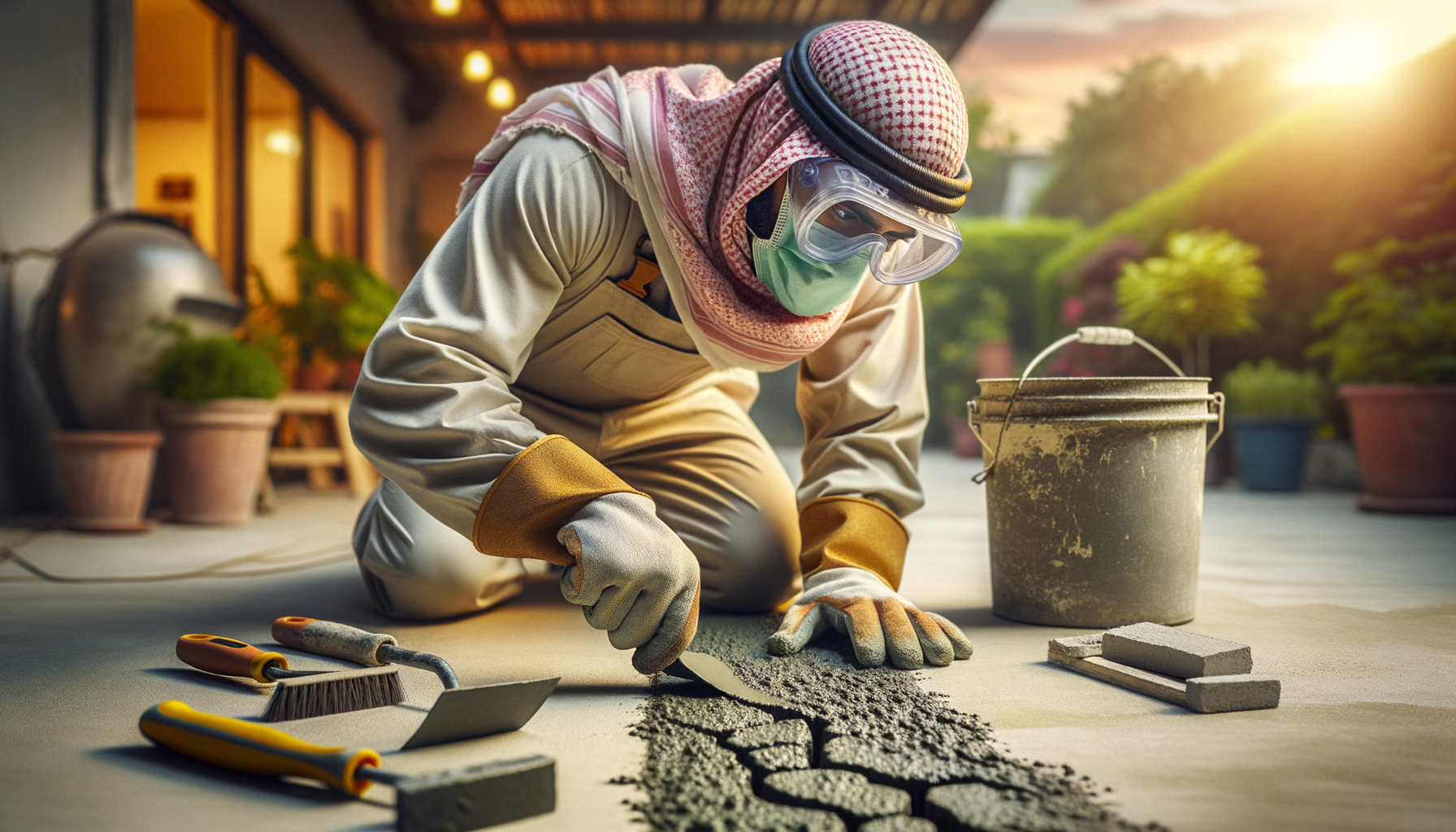
- Protective Gear: Wear gloves, goggles, and a mask.
How to Fix Cement Cracks
-
Prepare the Area:
- Clean the crack’s surroundings with a wire brush to remove loose debris.
-
Widen the Crack:
- Use a chisel and hammer to make the crack a bit wider for better repair compound adhesion.
- Clean out the debris again with the wire brush.
-
Mix the Repair Compound:
- Follow the instructions to get the right consistency.
- Mix well in a bucket with the right amount of water and compound.
-
Apply the Compound:
- Use a trowel to fill the crack fully, ensuring no air pockets.
- Smooth the surface for a neat finish.
-
Let it Cure:
- Let the repair set for the recommended time.
- Keep it moist to avoid drying too fast and causing new cracks.
Tips and Best Practices
Weather
- Avoid fixing cracks in extreme hot or cold. Mild and dry weather is best.
Regular Checks
- Check your cement surfaces often to find and fix new cracks early.
Use Sealants
- A concrete sealant can help prevent future cracks.
Common Mistakes
Using the Wrong Material
- Make sure you use the right compound for the specific crack.
Ignoring Small Cracks
- Even small cracks can become bigger problems if left alone.
Incorrect Mixing
- Follow instructions carefully to ensure the repair is strong.
When to Call a Professional
Big Damage
- If the cracks are very large, get help from a professional.
Many Cracks
- A professional can assess and fix multiple cracks.
Structural Problems
- For cracks that may affect the building’s structure, professional advice is important.
Conclusion
Fixing cement cracks quickly is important to keep your property safe, looking nice, and valuable. Whether you do small repairs yourself or need a pro for bigger jobs, acting fast will help keep your cement surfaces in good shape.
Additional Resources
- How-To Videos
- Recommended Products
- Further Reading Links
Leave a Reply